Extra 20% off today!* Use code NOV20
Extra 20% off today!* Use code NOV20
5 experiences found
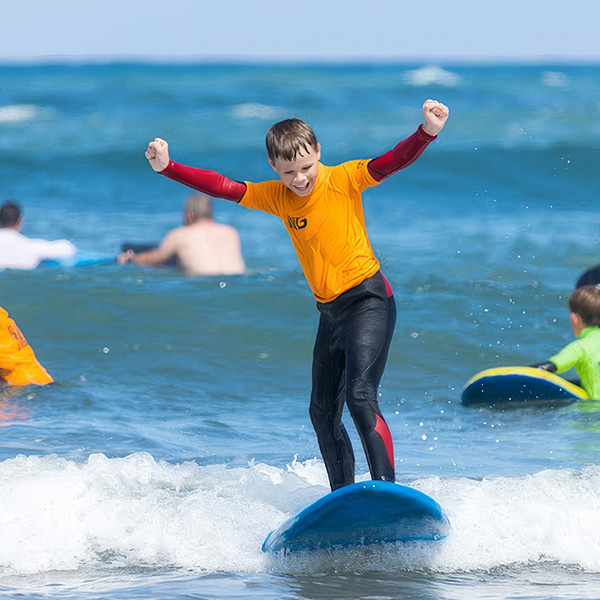
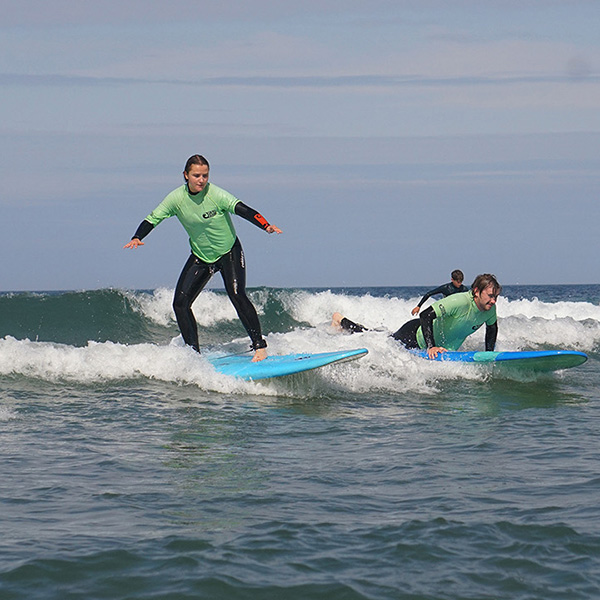
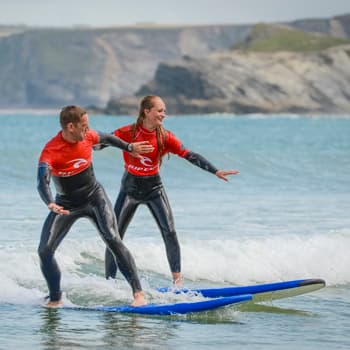
Although you can just rock up to a beach with your surfboard under your arm, beginners are always advised to take a surfing lesson before going it alone. There are some essentials to learn and it's much better to get a proper lesson than be one of those 'all the gear no idea' surf types struggling to stand up on their board for lack of technique!
The thing about surfing is that it's not as easy as the likes of the legend that is Kelly Slater make it look. It's not just a case of standing on the shoreline with your surfboard under your arm, picking the surf break and riding it. Beginners are better off going for easy spilling waves no bigger than four feet. Now that may not sound very high, but when you are out there in the sea as it rushes towards you it's still pretty impressive.
Yes! When the winds are right and the waves are rolling in, it's definitely a case of surf's up in the UK. The obvious place to learn how to surf and ride barrels like a pro is Cornwall. With beautiful Blue Flag beaches, you might be forgiven for thinking it was Hawaii and not Cornwall! As the saying goes, 'If it swells, ride it' and that's just what happens here, but it also goes off in North Devon and even Sunderland too!
For our group surf lessons you will need to be able to swim for around 25m and be confident in the water.
No problem. These surf lessons are specifically aimed at those with no or very little surf experience, making them ideal for beginners.
You'll need swimwear and a towel. Most first-time surfers feel more comfortable in a wetsuit for the lesson, so most surf schools provide winter-weight (ie nice and thick) wetsuits for free or a small fee payable locally for pupils. You can also bring your own.
Not as daft a question as it sounds! Surf schools generally have changing rooms with lockers on or near the beach where you'll be surfing. If not, there are tubs that you can put lock your personal items in and then lock in a safe place.
Our surf schools are located in areas of the UK that are well-known for good swells. Looking at the weather and sea conditions, the instructors will decide on the day which bay or beach you'll be going to for your lesson to make sure the conditions are the best they can be for your level of surfing.
Glasses are OK if they are attached. For contact lens wearers, surf schools recommend that you wear a pair of daily lenses if possible.
In places like Devon, Cornwall and Dorset, water temperatures regularly reach between 24 and 26 degrees during the summer months, which is pretty nice! Having said that, most beginners still prefer having a wetsuit on, but surfing barefoot is definitely do-able. In winter months, surf schools lend you wetsuit boots, gloves and hats.