Extra 20% off today!* Use code NOV20
Extra 20% off today!* Use code NOV20
10 experiences found
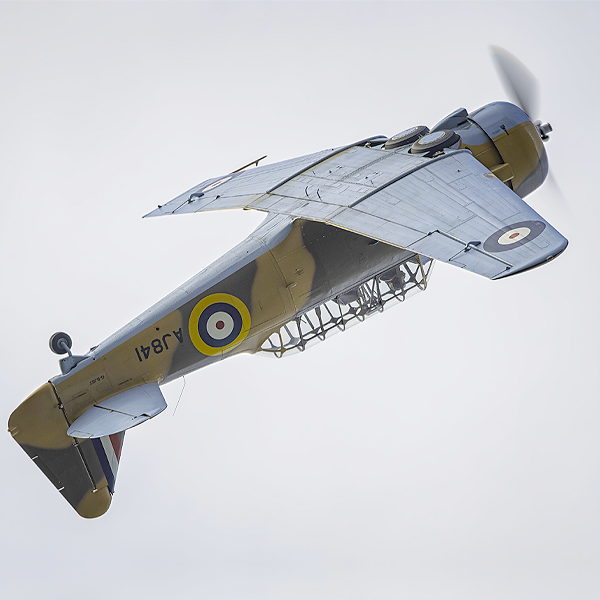
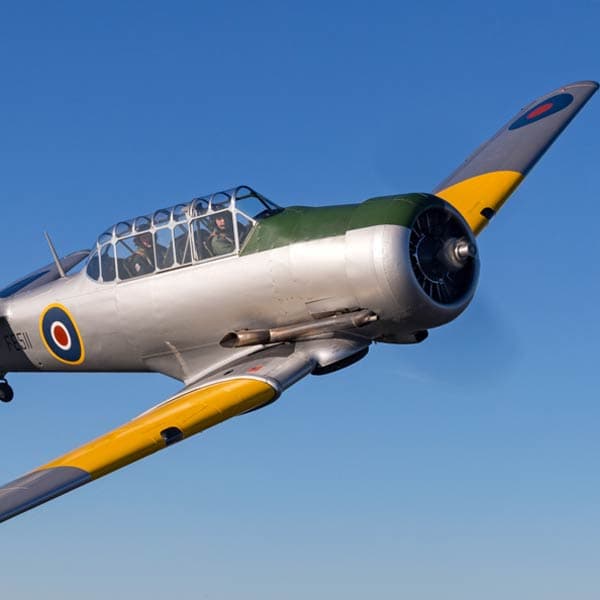
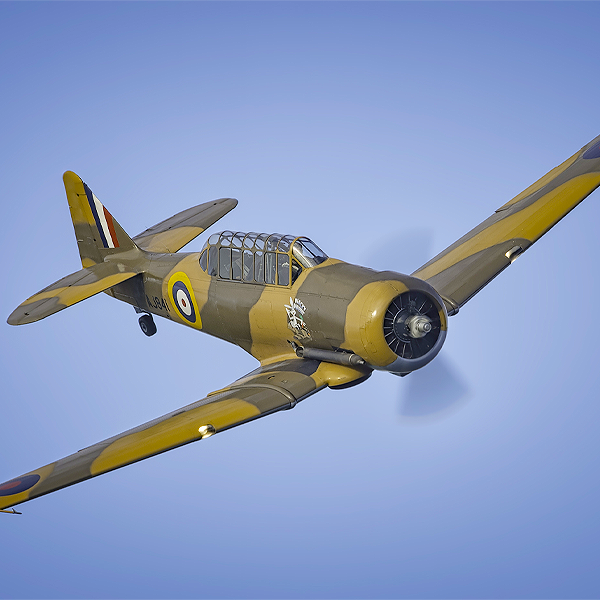

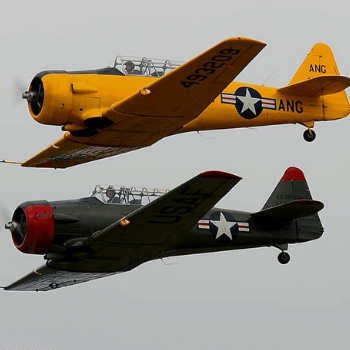
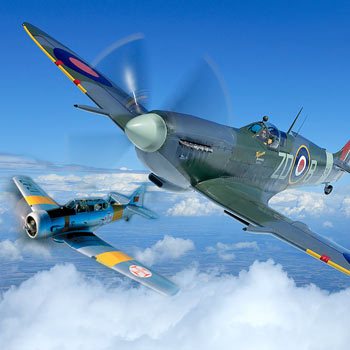
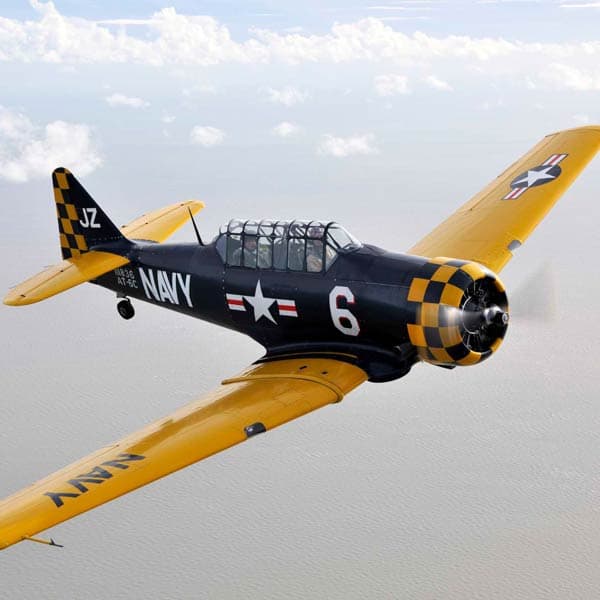
Nothing! The plane is known as the North American Aviation T-6 Texan in its native USA. In the Commonwealth, the aircraft is more commonly known as the Harvard. It's the same aeroplane, just different names - although we have no idea why that's the case!
Yes of course. Flying in a Harvard is a big deal, so all our operators welcome spectators to come and cheer you on. Airfields often have good facilities on site, from a friendly clubhouse and cafe, to a full on visitor centre and museum, like you'll find at Duxford.
It does indeed make a lot of noise for a little plane. They were originally powered by Pratt & Whitney Wasp radial engines and once you've got that huge prop primed, you can't miss the sound of the Harvard. It might not be the iconic Merlin engine of the Spitfire that's much-loved by us Brits, but it's a still a symphony of sound you'll love!
The Texan was designed and developed by North American Aviation in the USA. The first Texan flew in 1935 and was adopted by Air Forces in the States and around the world, including the RAF, where it was renamed the Harvard. Even other manufacturers based their planes on the design of the Texan. The final version of this iconic aircraft was built by the Canadian Car and Foundry in Edmonton, Canada, with production finally ceasing in the 1950s.
Over 15,000 of these iconic planes were built, being dispatched to pretty much every corner of the globe.
Estimates reckon around 500 Harvards are still airworthy and flying in the world today. Of course, to be certificated to fly, these planes have all undergone rigorous renovation and restoration to meet today's strict aviation standards, without losing the essence of flying in a classic warbird.
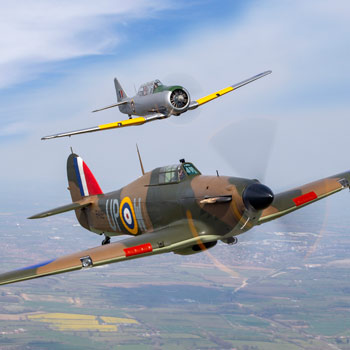
It is indeed. Although operational well before WW2 started, the Harvard become the trainer of choice for pilots in WW2. The pick of the best pilots were chosen to train on the tricky Harvard. It was seen as a stepping stone to fighter planes such as the Spitfire - even though the Harvard was a pretty adept fighter in its own right!
We have Harvards dating back to the 1940s and 50s that operate these flights. All have a wonderful story to tell, with each plane sporting their particular livery for a specific reason. All do, of course, meet current CAA safety standards.
That 600bhp Pratt & Whitney engine can get you flying at an impressive 208mph at full throttle!
No. It's what is called a taildragger aeroplane for start. That means there's no tailwheel to aid take off and landing, just a skid. And that means it's grass runway landings only. It's certainly a handful this plane, which is why only fully qualified pilots on this type rating will be flying!