Extra 20% off today!* Use code NOV20
Extra 20% off today!* Use code NOV20
5 experiences found
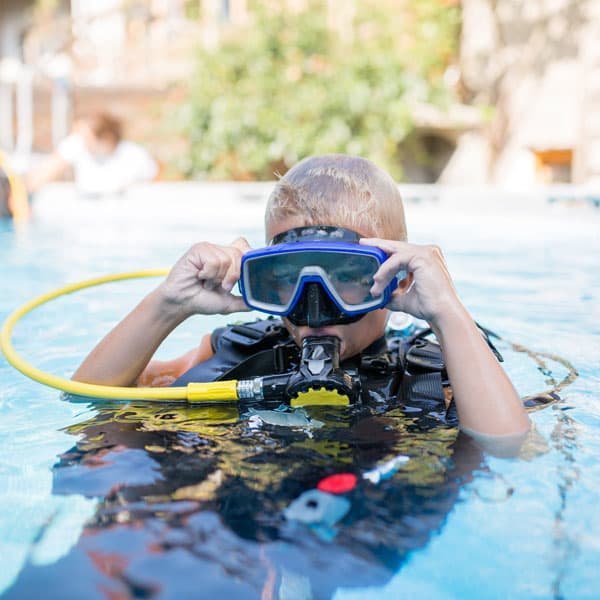
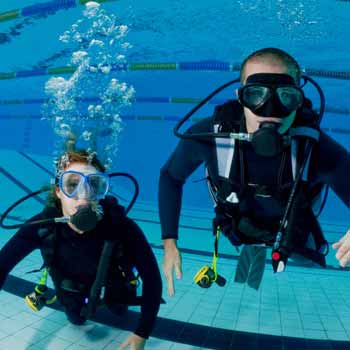
For these taster scuba diving experiences you will be taking your first breaths underwater in swimming pools around the country. They may be indoor or outdoor private pools owned by the scuba schools or municipal baths, it depends on each supplier. It's only once you've mastered the basics in a pool (or what divers call 'confined waters'), that a PADI instructor would even consider taking you into open waters.
A bit like when taking off in a plane, diving in water means changes in pressure on your ear drums and that's what can make them hurt or 'pop' as we commonly say. Your dive instructor will talk about your ears hurting, what to expect when you dive and what to do about it, so don't worry, they've got it covered!
Yes you can. Dive schools recommend that you use soft contact lenses, but other than that there's no reason why you can't go scuba diving if you're a contact lens wearer. Just be aware that if your eyes react when you go swimming in chlorinated water, the same may happen on these scuba sessions if they take place in indoor swimming pools.
This is how divers communicate with each other underwater. You'll be shown the basic signals you'll need as part of your safety briefing on dry land, so that once you're in the water you can tell your instructor if you're OK!
It depends how far you want to go with your scuba training. These taster lessons are very reasonably priced, as the aim is to see if you like the idea of learning to scuba dive. And don't forget, the vouchers we sell are for two people to try scuba diving together, making them even better value!
It's not actually illegal to dive without a qualification. But given all the equipment you need (mask, fins, harness, regulators, cylinders and wet/dry suit), you really do need to know how to use it all before you go diving. We would always recommend you take lessons and go for an appropriate qualification, such as the PADI Open Water Award, before you start diving.
PADI is the Professional Association of Diving Instructors - the lead body in the sport of diving. The PADI Open Water Diving Award is the entry-level certificate that shows you know how to dive. It's internationally recognised, so with it you can book for a dive at schools around the world and they know you have a certain competence level. The Discovery experiences that we offer have been put together by PADI as the ideal lead-in to the PADI Open Water Awards, without having to commit to a training course before knowing whether you like diving or not.
Yes. There's quite a lot of gear needed to go scuba diving and it's all quite expensive. For these taster courses you just need to bring yourself, swim gear and some enthusiasm to learn how to dive!
For these freedive and scuba experiences you just need to be confident in water. However, if you decide you like diving and want to continue for your PADI Open Water Award, you will need to be able to swim for 200m and tread water for 10 minutes (with or without floatation aids).
The water doesn't need to be deep to learn how to use the diving apparatus, as it's all about learning the techniques of breathing underwater. Once you're on open dives, it's recommended that novices dive no more than 18m, but actually most diving is around 10m and there is lots of stunning sea life to see at this depth.